Flat Roof Warranty Coverage and Exclusions Explained
Learn what a flat roof warranty covers, which exclusions catch homeowners off guard, and how ponding water and workmanship limits can void your claim.
Quick Summary
A flat roof warranty usually has three layers: a manufacturer warranty on the membrane, a material warranty on components like insulation and flashing, and a workmanship warranty covering installation errors. Most cover leaks caused by a defect or covered installation error, but not storm damage, neglect or unapproved repairs.
- Each warranty layer covers a different kind of failure and has its own term and claim process.
- Most flat roof warranties exclude ponding water beyond a stated period, often 48 hours.
- Keep dated logs, photos and invoices of all maintenance to protect your coverage.
- Unauthorized repairs or modifications commonly void coverage for the affected area.
- Compare term, scope, labor, proration and transferability, since a long term alone is not enough.
Table of Contents
- Manufacturer, material and workmanship warranties
- What a Flat Roof Warranty Typically Covers
- Common Flat Roof Warranty Exclusions Checklist
- What Voids a Roof Warranty
- Roof Warranty Length and Coverage Periods
- Flat Roof Workmanship Warranty: What Installers Cover
- Comparing Coverage Scopes and Filing a Claim in Katy, TX
- Frequently Asked Questions
How Flat Roof Warranties Are Structured
Flat roof warranties usually come in three layers: a manufacturer warranty on the membrane, a material warranty on related components, and a workmanship warranty from the installer. Each one covers a different kind of failure, and each has its own term, conditions and claim process. Knowing which layer applies to your problem is the first step to a successful claim.
Big River Roofing guide to flat roof warranty types and coverage periods
Manufacturer, material and workmanship warranties
The manufacturer warranty covers defects in the roofing membrane itself, such as factory flaws in the material. The material warranty typically covers components like insulation, flashing or fasteners. The workmanship warranty, sometimes called the contractor warranty, covers errors made during installation, such as poorly sealed seams or improper flashing details.
Read the actual warranty document for the term that applies to your roof rather than assuming a general figure.
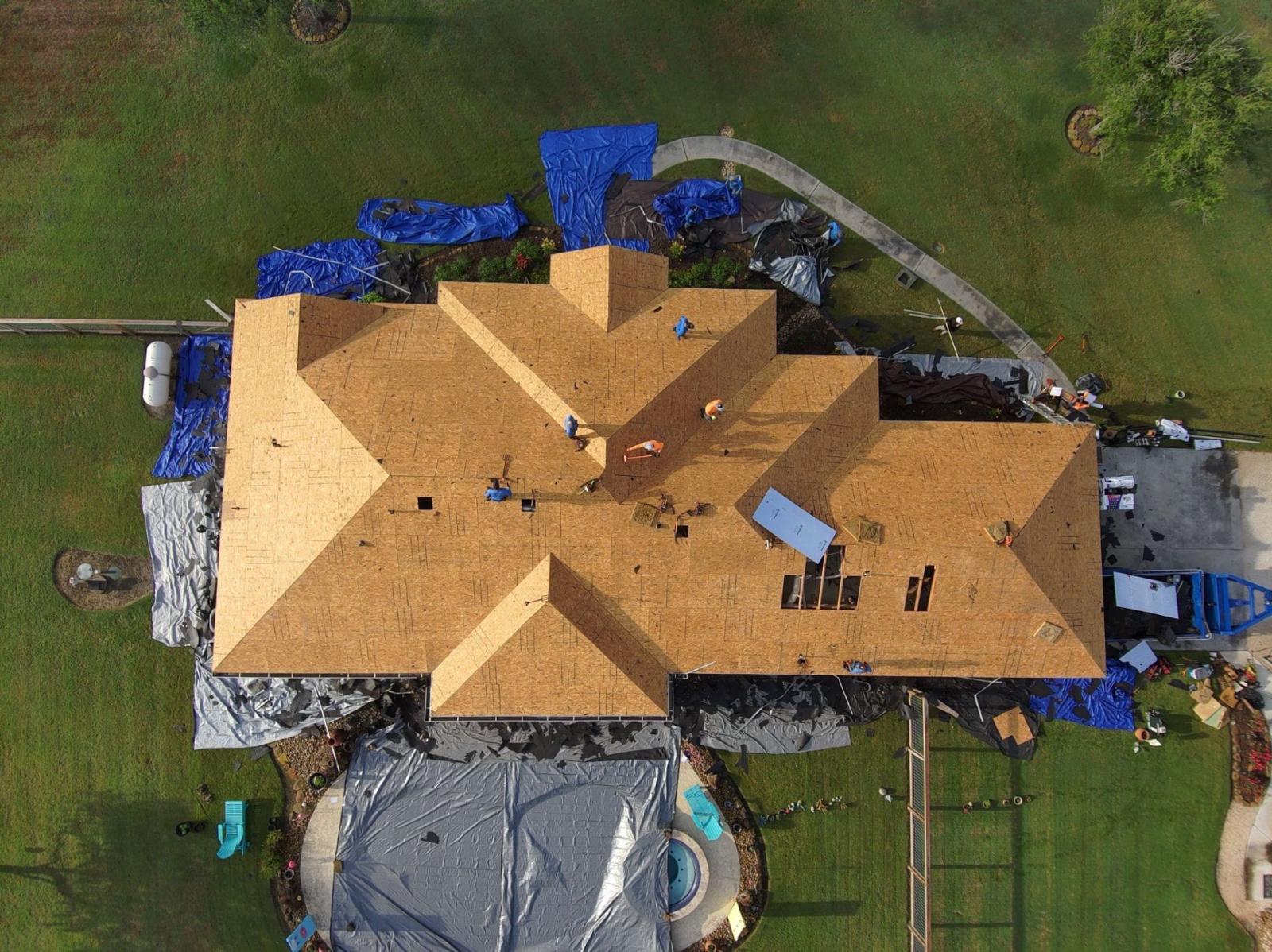 Aerial drone view of a house under roof renovation, with bare plywood sheathing exposed and blue tarps covering nearby areas.
What a Flat Roof Warranty Typically Covers
A flat roof warranty generally promises that the roofing system will remain watertight for the covered term. In practice, it protects against leaks caused by a defect in the material or in the installation, not against every possible water problem.
Most commercial roof warranties provide remedies for watertightness only when a leak is caused by a covered event. A warranty does not stop or prevent leaks from occurring, so treat it as a remedy for defined failures, not a guarantee of a leak-free roof.
Coverage typically includes:
- Membrane defects that cause water intrusion
- Seam failures that were present at installation
- Leaks traced to covered installation errors
- Repair or replacement of the affected section, within the warranty's limits
Common Flat Roof Warranty Exclusions Checklist
Exclusions are where most denied claims begin, and the wording that matters is rarely on the front page of the warranty. Before you file, read the exclusions section line by line and match each item below to the exact clause in your document. Where a clause is ambiguous, ask the manufacturer or installer to confirm the interpretation in writing before a problem occurs.
- Ponding water and drainage: Many standard warranties exclude damage from water that stands on the roof beyond a stated period, 48 hours is a common threshold, but not universal. The exclusion usually targets damage caused by the standing water itself, not a membrane defect that happens to be near a drain. Confirm the threshold, how it is measured, and whether the warranty requires positive drainage or a minimum slope.
- Neglected maintenance: Failure to clear debris, drains, gutters and scuppers is one of the most frequently cited denial reasons. Most warranties condition coverage on routine inspections and documented maintenance, so keep a log with dates, photos and invoices.
- Weather, storm, hail and wind damage: Hail, high winds and falling debris are typically handled under a property insurance policy, not the roof warranty. The dividing line is causation: a membrane defect that lets water in during a storm may be covered, while damage caused by the storm itself usually is not. Document the sequence of events.
- Unauthorized repairs or modifications: Work performed by someone other than the approved contractor, or changes to the roof system without written approval, commonly void coverage for the affected area. Even a well-intentioned patch can shift responsibility away from the manufacturer.
- Foot traffic and rooftop equipment: Damage from HVAC service, satellite installers, or unapproved foot traffic is frequently excluded. If equipment is added or serviced, confirm in writing that the work will not affect coverage.
- Consequential or interior damage: Many warranties cover the roof membrane and flashings but not ceilings, insulation, drywall or contents. That gap is usually filled by property insurance, so coordinate the two rather than assuming one covers everything.
- Improper storage, installation environment or substrate: Some warranties exclude failures tied to conditions at installation, moisture in the substrate, inadequate decking, or installation outside the manufacturer's temperature range. These clauses matter most in hot, humid climates where installation timing affects adhesion.
- Chemical or biological exposure: Discharges from rooftop equipment, grease, and some biological growth can be excluded. Commercial kitchens and industrial roofs see this clause more often than residential ones.
Watch out: a single excluded item does not necessarily void the entire warranty, but it can void coverage for the affected area or for the specific failure, read whether the clause says "void" or "limited to."
The main exclusions that most often lead to denied flat roof warranty claims are summarised below.
| Exclusion | Typical threshold or condition | What to confirm |
|---|---|---|
| Ponding water | Often 48 hours, not universal | Threshold, how measured, slope requirement |
| Neglected maintenance | Coverage tied to routine inspections | Keep dated logs, photos and invoices |
| Weather, hail and wind | Usually handled by property insurance | Whether a membrane defect caused the leak |
| Unauthorized repairs | Often voids coverage for affected area | Work done by approved contractor only |
| Foot traffic and equipment | Damage from HVAC or satellite work excluded | Written confirmation before work starts |
| Consequential interior damage | Ceilings, insulation, drywall often not covered | Coordinate with property insurance |
What Voids a Roof Warranty
Several common actions can void a flat roof warranty even when the underlying defect is real. The most frequent causes are unapproved repairs, skipped inspections and missed maintenance intervals. Keep records of every service visit, and confirm in writing that any repair you plan will not affect your coverage. Keeping those records and confirming repair approval also makes it easier to assess your warranty before a claim arises, with Shelby Construction Services as a useful next point of reference.
Ownership changes can also matter. Some warranties are transferable and some are not, and transfer often requires notice or a fee. Confirm this before you sell the property.
Roof Warranty Length and Coverage Periods
Warranty length is not the same as roof lifespan, and the longest term is not automatically the best protection. A 20-year warranty does not promise the roof will last 20 years, and many warranties prorate remedies or reduce the dollar amount available as the roof ages. Compare term, scope, remedy and claim process together.
A practical way to compare coverage periods is to build a matrix with one row per warranty layer and one column per question:
- Term: How many years, and does the term start at substantial completion or at manufacture?
- Coverage scope: Membrane only, or the full system including insulation, flashing and fasteners?
- Labor: Is labor included for the full term, for a shorter period, or excluded entirely?
- Leak response: Does the warranty promise a response time, and is that a remedy or just a service commitment?
- Proration: Is the remedy full replacement, a prorated credit, or repair only?
- Transferability: Does coverage follow a property sale, and is there a fee or deadline?
- Maintenance duties: What inspections and records are required to keep coverage in force?
- Exclusions: Which of the items in the checklist above apply?
Manufacturer warranties and workmanship warranties can run on different clocks. A manufacturer warranty may run 10 to 30 years depending on membrane type, while a workmanship warranty is often shorter and tied to the installer's business. That mismatch matters at year 12, when the membrane warranty may still be active but the installer's labor coverage has expired.
Watch out: a warranty that advertises a long term but caps the total dollar remedy can cost more to use than a shorter warranty with full repair coverage. Read the remedy clause, not just the number of years.
Flat Roof Workmanship Warranty: What Installers Cover
The workmanship warranty is the layer most likely to matter in a dispute with a contractor. It typically covers errors in how the roof was installed, such as improperly lapped seams, missed flashing or poor drainage detailing.
Workmanship warranties are usually shorter than manufacturer warranties. Get the term in writing, and confirm the installer is still in business before you need it. A warranty backed by a company that has closed is worth little.
Comparing Coverage Scopes and Filing a Claim in Katy, TX
When comparing warranties, build a simple matrix: list each layer, its term, its covered events, its exclusions and whether it transfers.
If you suspect a covered leak, document it immediately. Take dated photos, note the location, record the date water was first observed, and keep any receipts for emergency repairs. Then contact the warranty provider in writing and follow the claim steps in your document.
Roof Repair Company offers free storm and hail damage inspections and written summaries of findings that can support an insurance claim. For a flat roof leak in the Katy area, start with a book a free inspection and a documented report.
For practical steps on finding the source of a leak, see 7 steps to check your attic after a roof leak. For drainage problems that can trigger ponding exclusions, read how to improve flat roof drainage.
Benchmark Inc. analysis of commercial roof warranties and leak remedies
Frequently Asked Questions
What voids a roof warranty?
Most flat roof warranties can be voided by unauthorized repairs, neglect such as failing to clear drains or debris, roof modifications like adding HVAC units without approval, and damage from events the warranty excludes. Some warranties exclude ponding water that remains for a stated period. The specific written terms of each warranty decide whether ponding water is excluded. Keep maintenance and inspection records and review your warranty document before any work is done.
What is the typical warranty length for a flat roof?
Roof warranty coverage periods vary, and the duration depends on the warranty issued. Manufacturer warranties often run longer than workmanship warranties, which are usually shorter. Warranty length on its own does not show what is covered, so compare the coverage scope and exclusions alongside the term. Ask your roofer to confirm the exact coverage period in writing before installation.
Does a flat roof warranty cover leaks and water damage?
A warranty does not prevent leaks. Most commercial roof warranties provide remedies for watertightness only when a leak is caused by a covered event. Whether leak damage is covered depends on the cause: a membrane defect or seam failure may be covered, while leaks from neglect, unapproved modifications or excluded ponding water typically are not. Document any leak with photos and a written inspection report, and report it promptly according to the warranty's claim requirements.
Does a roof warranty cover installation mistakes?
A workmanship warranty from the installing contractor generally covers errors made during installation for a set period. Manufacturer warranties usually cover material defects rather than installation errors, unless the installation was performed by an approved contractor under the manufacturer's program. Because the two warranties address different risks, confirm which one applies to your roof and how long each lasts before work begins.
Need Professional Roof Replacement?
Roof Repair Company provides expert roof replacement services throughout Katy, TX. Contact us today for a free inspection and estimate.