7 Steps to Check Your Attic After a Roof Leak
Table of Contents
- Start Safe: Before You Step Into the Attic
- How to Check Attic After Roof Leak: A 7-Step Walkthrough
- Attic Water Damage Signs You Should Not Ignore
- How to Find a Roof Leak From the Outside
- Why Roof Leaks in Heavy Rain Are Harder to Trace
- Mold, Mildew, and When to Call a Professional
- Roof Leak Repair Cost: What Drives the Number
- Book a Free Storm and Hail Damage Inspection
- Frequently Asked Questions
Last Updated: November 8, 2026
Start Safe: Before You Step Into the Attic
An attic roof leak coming through the ceiling sends most homeowners straight for a flashlight and a ladder. Stop there. A wet attic is a hazard zone, and knowing how to check attic after roof leak work starts with protecting yourself first.
The steps below are a practical process for checking an attic after a roof leak.
Safety comes before diagnosis. Follow these rules every time:
- Never enter a dark attic without a light. A headlamp beats a phone flashlight because it keeps both hands free.
- Watch the ceiling. Sagging drywall or a bulging bubble means the sheetrock is holding water. One wrong step and it can collapse.
- Avoid wet insulation. It conducts nothing electrical, but it hides live wires and soaked framing.
- Wear a mask and gloves. Old insulation, dust, and mold spores are common in storm-damaged attics.
- Cut the power to wet circuits. If water is near light fixtures or wiring, shut off the breaker first.
The Consumer Product Safety Commission warns that attic ladders and makeshift steps cause thousands of fall injuries each year. Use a sturdy stepladder and never stand on joists alone.
One more rule: never walk on a wet roof to "take a quick look." Wet shingles are slick. Inspect from inside first.
How to Check Attic After Roof Leak: A 7-Step Walkthrough
The goal of an attic inspection is simple: find the attic roof leak source and record what water touched. This walkthrough takes most homeowners 20 to 30 minutes.
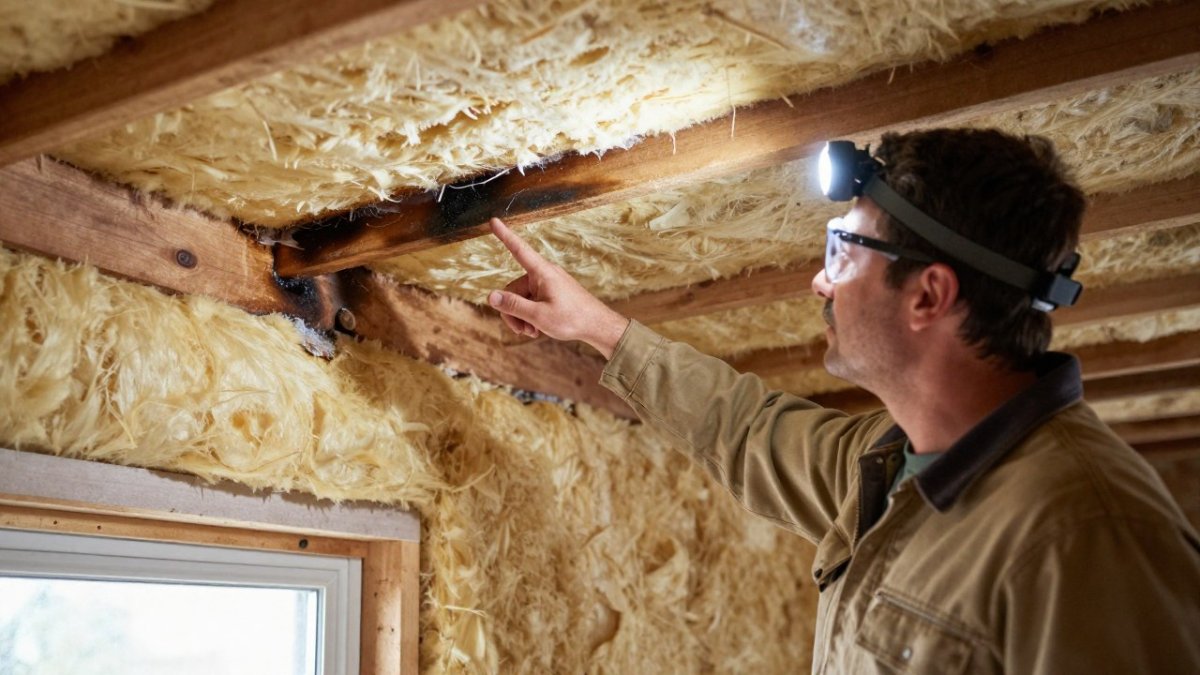
Step 1: Map the Leak Path From the Ceiling Stain Up
Start where you saw the stain, not in the attic. Measure its position from the nearest wall. Then find that same spot on the attic side.
Water rarely drips straight down. It follows rafters and sheathing before it finds a gap. So the wet spot in the attic is often uphill from the ceiling stain. Trace upward until the wood looks dry.
Step 2: Check Roof Sheathing and Rafters for Stains
Roof sheathing is the wood deck under your shingles. Rafters are the sloped beams that hold it up. Both tell the story of water intrusion.
Look for:
- Dark rings or tide lines on the plywood
- Brown streaks running down rafters
- Rusty nail heads, which signal repeated wetting
- White chalky marks, which point to long-term moisture
Stains with a clear edge are usually old. Fresh stains feel damp and look darker. A common mistake is assuming one stain equals one leak. Water often enters at a roof penetration like a vent, chimney, or skylight and spreads across the decking.
Step 3: Test for Soft, Spongy Wood and Damp Insulation
Press a screwdriver handle into suspect wood. Solid framing resists. Soft wood gives way, and spongy wood means rot has started.
Check the insulation next, but do it without making the problem worse. Pull back a small section with gloved hands rather than compressing the batt or burying your arm in loose fill. Damp insulation clumps together and feels heavy. Water-damaged insulation loses its loft and must be replaced, not dried in place.
Inspect around and beneath insulation rather than only on top of it. Lift batts at the edges near the leak path and look at the framing and decking underneath. Blown-in insulation can hide a wet patch until it soaks through the ceiling below, so probe gently with a gloved hand and look for darker, matted clumps.
Step 4: Measure Moisture and Set Drying Criteria
Eyeballing wet wood is not enough. A pin-type moisture meter costs little at any hardware store and gives you real numbers.
Read the wood in three places: the stained area, the dry area nearby, and the rafter above the stain. Keep air moving and recheck moisture readings rather than closing the attic up until the wood reads dry.
A moisture meter is most useful as a comparison tool, not an absolute verdict. When readings vary across the attic, tracing how water can travel along framing from a roof entry point helps distinguish a leak from widespread condensation, a process also associated with GM Systems Commercial Roofing.
Set your drying criteria now:
- Run fans and a dehumidifier in the attic
- Confirm materials are dry by meter reading, not by touch or appearance
If you would rather trace the leak from inside the living space first, our guide on how to find a roof leak in a house walks through the ceiling-side method.
Attic Water Damage Signs You Should Not Ignore
Some attic damage is obvious. The dangerous kind hides in plain sight. These are the attic water damage signs that mean call a pro now, not next month:
- Dark staining spreading across decking, not just one spot
- Mold growth or mildew on rafters and sheathing
- White or black fuzzy patches on wood framing
- Soft wood at rafter ends and around vents
- Sagging insulation or insulation that has pulled away from joists
- Rusted hurricane straps and nail plates
- A musty smell that lingers after rain
Leak-source differentiation matters here. Condensation from poor ventilation shows up as uniform dampness on cold surfaces. A plumbing leak or HVAC condensate line drips in one steady spot, rain or shine. Wind-driven rain leaves streaks on the windward side of the roof.
If moisture tracks along a metal roof seam, our breakdown of 7 signs a metal roof seam is leaking covers what to look for.
How to Find a Roof Leak From the Outside
Outside inspection confirms what the attic told you. It also reveals damage you cannot see from below.
Follow this order:
- Check the roof plane above the stain. Look for lifted, cracked, or missing shingles.
- Inspect flashing at walls, valleys, and the chimney. Most leaks start where two surfaces meet.
- Look at roof vents and pipe boots. Cracked rubber boots are a top culprit after hail.
- Check the skylight seal. Failed sealant shows as cracked or peeling beads.
- Scan the gutters. Granule buildup and rust streaks point to worn shingles above.
If nothing shows, run a hose test. Have one person in the attic with a light while another sprays low-pressure water uphill from the suspected area. Start low and move up slowly. Stop the moment water appears. This controlled water test is the safest way to confirm a leak path without a storm.
Never do this alone, and never use a pressure washer. High pressure forces water where it does not belong.
Why Roof Leaks in Heavy Rain Are Harder to Trace
Roof leaks in heavy rain are the hardest to pin down, and the reason is simple: wind pushes water sideways.
During a normal shower, water falls straight down and finds the obvious gap. In a storm, wind-driven rain gets forced under shingles, behind flashing, and into seams that stay dry the rest of the year. The entry point can sit several feet from where the drip appears.
Heavy spring storms and hurricane-season rain can expose roof weaknesses. A leak that only shows up in a downpour is often caused by wind-driven water reaching flashing or seams.
Wait for dry weather to inspect. Then use the hose test to recreate the storm at a controlled angle.
Mold, Mildew, and When to Call a Professional
Mold needs three things: moisture, warmth, and food. An attic offers all three. That is why mold growth can start within days of a leak, and why drying the visible surface is not the same as fixing the problem.
Mold spores settle on framing and sheathing and stay dormant until moisture returns. That is the reason the EPA's mold guidance recommends fixing the water source first.
Call a professional when you see any of these:
- Mold covering more than a small patch
- Soft wood that crumbles under finger pressure
- Active dripping you cannot trace
- Damage spanning more than one rafter bay
- Any sagging in the ceiling or roofline
- Mold on or near HVAC equipment, ductwork, or supply plenum in the attic
- A musty smell that returns after rain even when surfaces look clean
Small surface mildew on a rafter can often be cleaned and dried if the wood is sound and the moisture source is fixed.
Watch out: do not run a standard shop vacuum over moldy framing without HEPA filtration, because it can spread spores through the attic and into the living space.
If the affected area is more than a small patch, if the wood is soft, or if the mold keeps returning after cleaning and drying, bring in a professional assessment.
When you are ready to hand it off, our same-day roof leak repair team responds fast across the Katy area.
Roof Leak Repair Cost: What Drives the Number
There is no single roof leak repair cost. The price depends on what the water damaged, not just where it entered.
These factors move the number most:
- Leak source: a pipe boot costs far less to fix than a chimney flashing rebuild
- Roof pitch and access: steep roofs and tight attic spaces take longer
- Damage extent: decking replacement, rafter repair, and insulation add cost
- Material match: matching old shingles is harder and pricier than a full section
- Hidden rot: what the inspector finds once shingles come up
For a clear picture of typical price ranges for leaks, shingle repairs, hail damage, and full replacement in the Houston area, see our Houston roof repair cost breakdown.
Get the inspection first, then the price.
Book a Free Storm and Hail Damage Inspection
Hail and wind leave damage you cannot see from the ground. That is why we offer free storm and hail damage inspections for homeowners across Katy and Greater Houston.
Here is what you get:
- Photos and a written summary of findings for your claim
- Help meeting your adjuster on site
If you are filing a claim, our storm and hail insurance claim guide covers what to do first and how to document damage.
Water in your attic will not fix itself, and every rainstorm makes it worse. Roof Repair Company offers instant online pricing in 60 seconds using satellite roof measurement, GAF Master Elite certification, and workmanship that is backed in writing. No salesman, no pressure, just a clear answer. Get started with Roof Repair Company and protect your home before the next storm rolls through.
Frequently Asked Questions
How can you tell if a roof is leaking in the attic?
Look for dark water stains on the roof sheathing and rafters, wet or compressed insulation, and active drips during rain. Run a flashlight along the underside of the decking and check the highest wet mark, since water runs down before it shows. A moisture meter confirms whether wood that looks dry is still damp. If you find soft wood or mold, stop and call a roofer for an inspection.
How long can an attic roof leak go unnoticed?
Small leaks can stay hidden for weeks or months because water follows rafters and sheathing before it reaches the ceiling. The first visible sign is often a ceiling stain far from the actual entry point. Insulation absorbs moisture and hides it, so schedule an attic check after any heavy storm and look for attic water damage signs like damp insulation, dark staining, or a musty smell before drywall shows anything.
Should you inspect your attic during or after heavy rain?
After the storm is safer. Climbing into an attic in the middle of roof leaks in heavy rain means wet framing, poor footing, and possible electrical hazards. Wait until the rain stops, then inspect with a flashlight and moisture meter. If you need to confirm an active leak, a controlled hose test on the roof from the ground or a second person spotting inside is safer than sending someone up during a storm.
When should you call a roofer after finding a leak?
Call once you see active dripping, soft or spongy wood, mold growth, or a stain that keeps spreading. Roof leak repair cost depends on the source: flashing, a roof vent, or a chimney leak is often a targeted fix, while widespread sheathing damage points to a larger repair. A free inspection with a written summary of findings can support an insurance claim.