What Are the Signs of Wind Damage to Your Roof?
Last Updated: November 16, 2026
Quick Summary
The clearest signs of wind damage to roof shingles are missing tabs, lifted edges, creased surfaces, and granules collecting in gutters. Check for missing or lifted shingles, creased and buckled shingles, granules in gutters, damaged flashing, lifted ridge caps, and water stains on ceilings or attic walls.
- High winds attack roof edges and ridge caps first, so check the perimeter and peak.
- Creased shingles fail early because the crack lets water in before the shingle visibly breaks.
- A heavy buildup of gritty granules in gutters means the shingle surface has worn down.
- Hail hits randomly across a roof, while wind damage clusters on slopes and edges facing the wind.
- Never walk a roof that is wet, steep, or visibly damaged; call a professional instead.
Table of Contents
- Why Wind Damage to a Roof Is Easy to Miss
- 8 Signs of Wind Damage to Check After a Storm
- How to Inspect a Roof for Wind Damage Safely
- Wind Damage vs. Hail Damage: Telling Them Apart
- How Wind Damage to Roof Insurance Coverage Usually Works
- Filing a Storm Damage Roof Insurance Claim Step by Step
- When to Call a Professional Instead of Checking Yourself
- Schedule a Free Storm Damage Inspection
- Frequently Asked Questions
Why Wind Damage to a Roof Is Easy to Miss
Wind damage to a roof rarely announces itself.
Roofs across Greater Houston often show the same pattern after a major wind event, and the damage is frequently there long before anyone notices it.
Forensic engineers who study roof failures point out that visible damage after a storm does not prove wind caused it, according to forensic guidance on wind-related roof damage.
8 Signs of Wind Damage to Check After a Storm
The clearest signs of wind damage to roof shingles are missing tabs, lifted edges, creased surfaces, and granules collecting in gutters. Check these eight items after any strong storm:
- Missing shingles, especially on slopes facing the wind
- Lifted or loose shingle tabs that no longer seal flat
- Creased or curled shingles with visible fold lines
- Buckled shingles along the roof deck
- Granules in gutters and downspouts
- Bent, loose, or missing flashing
- Lifted or damaged ridge caps
- Water stains on ceilings or attic walls
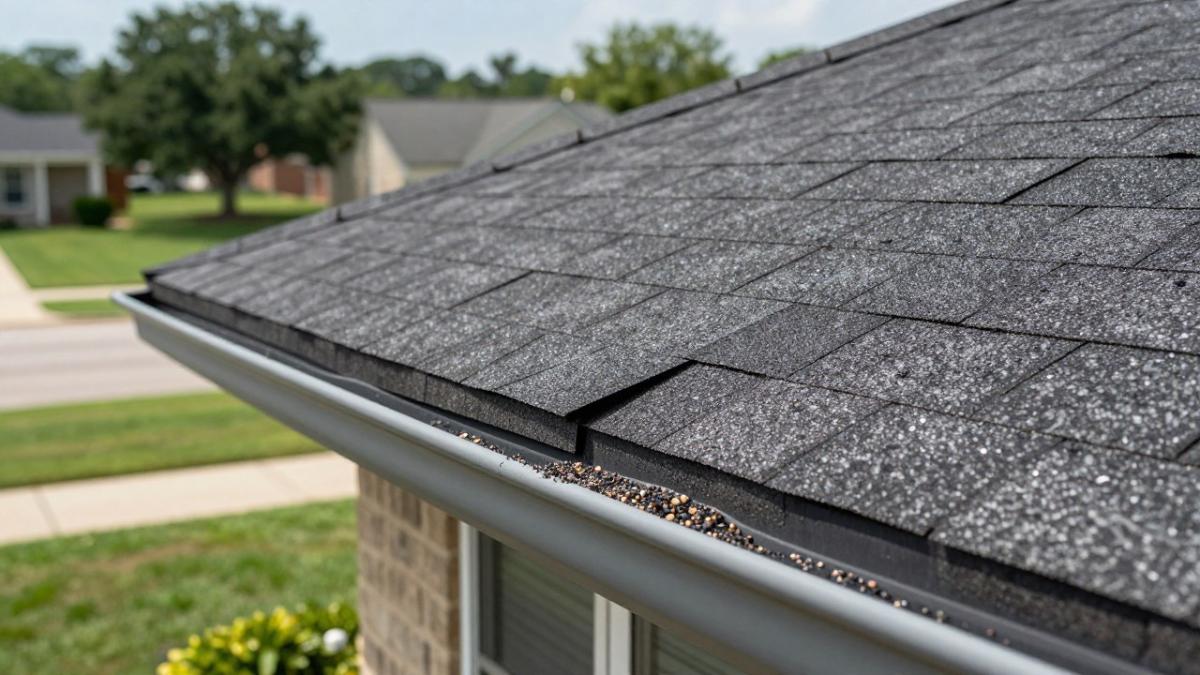
Missing, Lifted, and Displaced Shingles
Missing shingles are the easiest sign to spot and the easiest to underestimate. One missing tab exposes the underlayment beneath it.
Lifted shingles are trickier. The tab is still there, but the seal holding it down has broken.
Displaced ridge caps and loose edge shingles along the roof edge belong on the same list. High winds attack the edges first.
If you spot lifted or missing shingles, it helps to know what a small shingle repair actually costs before you decide how to proceed.
Creased, Curled, and Buckled Wind-Damaged Shingles
Wind-creased shingles tell a specific story. When wind lifts a shingle and folds it back, the mat underneath cracks along the fold. You see a line across the tab.
Curled and buckled shingles often follow. Curling usually starts at the edges. Buckling shows as a wave across the roof deck.
What most guides miss is this: creased shingles fail early, even if they look mostly intact. The crack lets water in long before the shingle visibly breaks.
Granule Loss, Flashing, and Gutter Damage
Granule loss is quiet damage. Wind scours the surface of asphalt shingles, and the loose granules wash into gutters and downspouts.
Check your gutters after a storm. A heavy buildup of gritty granules means the shingle surface has worn down.
Flashing damage matters just as much. Wind bends and loosens the metal seals around chimneys, vents, and wall junctions.
Here are the eight signs of wind damage the article says to check after any strong storm.
| Sign | What it looks like |
|---|---|
| Missing shingles | Missing tabs, especially on slopes facing the wind |
| Lifted shingle tabs | Tabs no longer seal flat |
| Creased shingles | Visible fold lines across the tab |
| Buckled shingles | Wave across the roof deck |
| Granules in gutters | Gritty buildup in gutters and downspouts |
| Flashing damage | Bent, loose, or missing flashing |
| Ridge caps | Lifted or damaged ridge caps |
| Water stains | Stains on ceilings or attic walls |
How to Inspect a Roof for Wind Damage Safely
Safe roof inspection starts on the ground, and for most homeowners it should stay there.
Ground-level walkaround (10-15 minutes)
- Walk the yard first. Look for fallen branches, roof debris, and shingle pieces on the ground. Note which side of the house the debris is on; that often points to the windward slope.
- Use binoculars from the yard. Scan each slope, especially the ones facing the storm's wind direction. Look for missing tabs, lifted edges, creased shingles, and displaced ridge caps.
- Check the gutters from a stepladder. Look for granules, shingle fragments, and loose flashing. A heavy grit buildup after a storm is a common sign of granule loss.
- Inspect the roof edge and ridge. High winds attack edges and ridge caps first, so check for loose or missing pieces along the perimeter and the peak.
- Photograph everything. Date-stamped photos from the ground help with any storm documentation later. Take wide shots first, then close-ups.
Attic and interior checks (with a flashlight)
- Look up from inside the attic. Check the roof decking for water stains, dark streaks, and daylight showing through. Daylight means a gap that wind-driven rain can exploit.
- Check ceilings and walls. Brown rings or streaks mean water intrusion. Note the location relative to the roof slope above.
- Smell for dampness. A musty odor in the attic after a storm can indicate moisture that has not yet stained the drywall.
What not to do
Watch out: never walk a roof that is wet, steep, or visibly damaged. One wrong step costs more than the inspection saves, and many homeowner injuries after storms happen on wet shingles.
Documentation workflow
- Label photos by date, slope (north, south, east, west), and what you see.
- Keep a simple written log of when you noticed each issue and whether it changed after the next rain.
- Save any contractor or inspector reports with the photos; they help if you file a claim.
For a deeper walkthrough of the first steps after a storm, our storm damage guides for Gulf Coast homeowners cover the first 72 hours and how to document damage per slope.
Wind Damage vs. Hail Damage: Telling Them Apart
Wind and hail leave different marks, and telling them apart changes how a claim gets handled.
Wind damage tends to show as missing, lifted, or creased shingles, plus displaced flashing and edge damage.
One test helps: hail hits randomly across a roof, while wind damage clusters on the slopes and edges facing the wind.
Both types can hit the same roof in one storm.
How Wind Damage to Roof Insurance Coverage Usually Works
Most homeowner policies cover wind damage to roof shingles when a storm caused it. The policy pays to restore the roof, minus your deductible.
Coverage usually depends on three things: the cause of damage, the age and condition of the roof, and your policy terms. Normal wear and tear is not covered. Storm damage is.
Two terms decide most claims:
- Actual Cash Value (ACV): pays replacement cost minus depreciation (Am I Covered?)
- Replacement Cost Value (RCV): pays the full cost to replace the roof
The difference between them is often thousands of dollars, so check which one your policy uses before you file.
Our insurance claims guides for Houston-area homeowners walk through how Texas roof claims actually get paid, written by the crews doing the work.
Filing a Storm Damage Roof Insurance Claim Step by Step
A storm damage roof insurance claim goes faster when the documentation is solid. Here is the sequence that works, with the details most homeowners skip.
- Document the damage before you touch anything. Take date-stamped photos from the ground and attic. Capture wide shots of each slope, then close-ups of missing, lifted, or creased shingles, granules in gutters, and any interior stains. Keep a written log of when you noticed each issue.
- Gather storm records. Save the date and time of the storm, any local news or weather reports, and your own notes on wind and rain. Insurers often ask for the date of loss, and a clear record reduces back-and-forth.
- Call your insurer and open the claim. Ask for the claim number and the name of the assigned adjuster. Confirm whether your policy uses Actual Cash Value (ACV) or Replacement Cost Value (RCV) before you file, since the difference is often thousands of dollars.
- Get a professional inspection with a written summary of findings. A roofer's written scope gives the adjuster a clear picture and helps align the repair estimate with the damage.
- Meet the adjuster on site. Having your roofer there keeps the scope accurate and lets you point out damage the adjuster might miss from the ground.
- Arrange temporary roof protection if the damage is active. Tarping or temporary sealing can prevent further water intrusion while the claim is reviewed. Keep receipts; temporary mitigation costs are sometimes reimbursable under the policy, but check your terms.
- Review the adjuster's report before you sign anything. Compare it with your photos and the roofer's summary. Ask questions about anything that was left out.
- Schedule the repair or replacement once the claim is approved. Get the scope in writing and confirm the work matches the approved estimate.
A written summary of findings can give the adjuster a clear scope and reduce back-and-forth.
Our insurance claims guides for Houston-area homeowners walk through how Texas roof claims actually get paid, written by the crews doing the work.
When to Call a Professional Instead of Checking Yourself
Call a professional when you see missing shingles, active leaks, or damage on a steep or high roof. Ground-level checks have limits, and some damage only shows up close.
A few situations need a pro every time:
- Water stains spreading on a ceiling or attic wall
- Missing shingles across more than a small area
- Damage after a named storm, where a claim is likely
- Any roof over one story, or with a steep pitch
- A roof past the middle of its service life
If you are already gathering contractor estimates, here is how to get a hail or wind damage estimate from a contractor before you hire anyone.
Schedule a Free Storm Damage Inspection
The signs of wind damage to roof surfaces rarely fix themselves.
If you live in Greater Houston, Roof Repair Company offers free storm and hail damage inspections. On-site adjuster meetings and a written summary of findings for claims are available, and the company stands behind its workmanship.
Get started with Roof Repair Company and get a clear, documented answer on your roof before the next storm season.
Frequently Asked Questions
Is wind damage to a roof covered by homeowners insurance?
In most Texas homeowners policies, wind damage to roof insurance coverage applies when a covered storm event causes the damage, and the policy is typically written on a replacement cost or actual cash value basis. Coverage depends on your deductible, policy type, and whether the damage meets the carrier's threshold. Document the damage with dated photos before making temporary repairs, and keep receipts. A professional inspection with a written summary of findings strengthens the claim and helps your adjuster see the same evidence you do.
What wind speed will damage a roof?
Damage thresholds vary by material and age. Three-tab asphalt shingles can begin losing tabs and seals in sustained winds around 50 to 60 mph, while newer architectural shingles rated for higher wind speeds hold up longer. Older roofs, missing granules, and broken shingle seals lower that threshold. In the Katy and Greater Houston area, thunderstorms and hurricane outer bands regularly push gusts into that range, so a roof that looks fine from the street can still have lifted or creased shingles after a storm.
Can wind damage cause a roof leak even if shingles are still in place?
Yes. Wind-driven rain can force water under shingle tabs that are lifted or have broken seals, and damaged flashing around chimneys, vents, and roof edges lets water in without any missing shingles. Creased wind-damaged shingles also crack over time as the mat fatigues. Check the attic for interior water stains, damp decking, and daylight at penetrations after a storm. If you find any of these, get a professional roof inspection before the next rain.
What should I do after finding wind damage to my roof?
Photograph everything from the ground first, then call your insurer to open a storm damage roof insurance claim. Make only safe temporary repairs, such as tarping, and keep the receipts. Do not sign anything from a door-knocking contractor before your adjuster has seen the roof. An inspector can meet the adjuster on site and help make repair scope and claim scope match.