Signs of Poor Attic Ventilation Homeowners Should Not Ignore
Last Updated: November 25, 2026
Quick Summary
Signs of poor attic ventilation include dark staining or mold on the underside of the roof deck, curling or granule-losing shingles, and frost on nail tips in winter. Indoors, upstairs rooms that run unusually hot, musty odors and peeling ceiling paint can also point to a ventilation problem.
- Dark staining, streaks or fuzzy patches on the roof deck signal moisture condensing there.
- Curling, cupping or granule loss can point to excess heat baking shingles from below.
- Frost on nail tips in winter means warm, damp air is reaching cold sheathing.
- Rust on nail heads suggests the problem has likely been going on for a while.
- Adding exhaust fans without intake vents can pull conditioned air out of the house.
Table of Contents
- Why Attic Ventilation Matters for Your Roof and Home
- Visual Signs Poor Attic Ventilation Leaves Behind
- Physical and Comfort Signs Inside the Home
- How to Vent an Attic Without Soffits
- Attic Ventilation Fans: When They Help and When They Hurt
- Balancing Attic Ventilation and Insulation
- Who to Call for an Attic Ventilation Inspection in Katy
- Frequently Asked Questions
Attic ventilation rarely gets attention until something goes wrong. By then, the damage is often spreading through your roof deck, insulation and framing. Attic problems often stay hidden until a stained ceiling or a shingle that wouldn't stay down makes them visible, and the real cause usually sits quietly in the attic above. Knowing the warning signs lets you catch a ventilation problem early, while the fix is still simple and inexpensive. Because poor airflow can leave moisture trapped where it is hard to see, recognizing hidden roof water damage can help you distinguish a ventilation problem from a leak before either causes more harm.
Why Attic Ventilation Matters for Your Roof and Home
Attic ventilation is the exchange of air between the attic and the outdoors. Warm, moist air rises from the living space below, and a properly ventilated attic lets that air escape before it condenses on cold surfaces. Your roof decking, rafters and insulation all depend on that airflow staying balanced.
Poor ventilation traps heat in summer and moisture in winter. Over time, that combination shortens the life of your shingles and invites rot, mold and pest activity. Most of the problems start small and stay hidden until they show up on the surface.
Visual Signs Poor Attic Ventilation Leaves Behind
Look at the underside of your roof deck first. Dark staining, streaks or fuzzy patches usually mean moisture has been condensing there. Mold grows quickly in that environment, and it often shows up near the ridge and along the rafters.
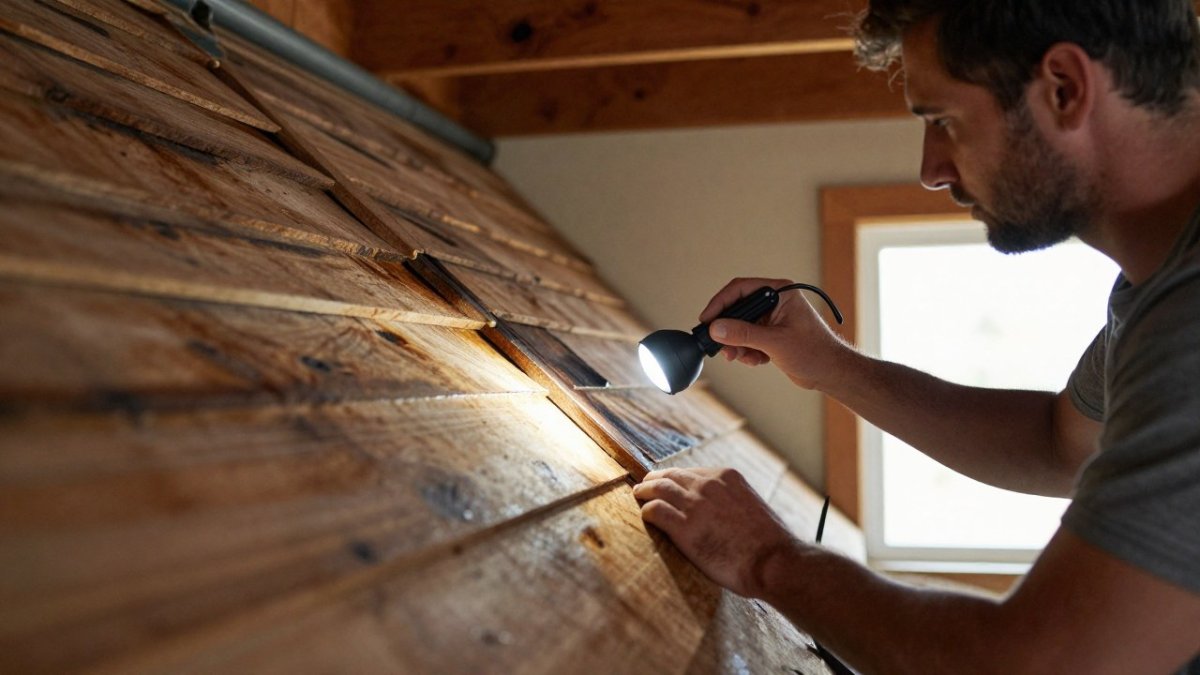
Next, check the shingles from the ground. Curling, cupping or granule loss can point to excess heat baking the roofing material from below. Shingles that age faster than expected on a home of similar age can also signal trapped heat.
Frost on nail tips in winter is another clue. When warm, damp air reaches cold sheathing, moisture freezes on the nails. In spring, that frost melts and drips, leaving water stains on the insulation and joists. If you spot rust on the nail heads, the problem has likely been going on for a while.
Watch out: Mold on attic wood is easy to mistake for ordinary dirt. If the staining is widespread or has a musty smell, have it checked before you paint or seal anything over it.
The visible warning signs below are easiest to spot from the attic and the ground.
| Sign | Where to look | What it suggests |
|---|---|---|
| Dark staining, streaks or fuzzy patches | Underside of the roof deck | Moisture condensing on the deck |
| Curling, cupping or granule loss | Shingles, viewed from the ground | Excess heat baking the roofing from below |
| Frost on nail tips | Nails in winter | Warm, damp air reaching cold sheathing |
| Rust on nail heads | Nails in the attic | Problem has likely been going on a while |
| Mold with musty smell | Attic wood | Check before painting or sealing over it |
Physical and Comfort Signs Inside the Home
Your attic affects the rooms below it. If the upstairs rooms feel noticeably hotter than the rest of the house, trapped attic heat is often the reason. The air conditioner works harder, and energy bills climb without any other obvious cause.
Ice dams are another warning sign in colder climates. When heat escapes into a poorly ventilated attic, it melts snow on the roof. That water refreezes at the cold eaves and can push under shingles, causing leaks along the ceiling line. Texas winters rarely produce heavy ice, but the same moisture pattern can still cause drips in a humid attic.
Musty odors and peeling paint on upstairs ceilings also suggest moisture is moving through the structure. Condensation dampens the insulation, which loses its effectiveness and can become a home for pests.
How to Vent an Attic Without Soffits
Many older homes lack soffit vents, the openings under the eaves that let fresh air enter the attic. Without them, air has no way to flow in from below, and the attic cannot ventilate properly even if it has a ridge vent.
A roofing professional can measure the attic and determine how much net free ventilation area you need. Keep in mind that adding only exhaust vents without intake can make the problem worse by pulling conditioned air from the house.
Attic Ventilation Fans: When They Help and When They Hurt
Powered attic fans can move a large volume of hot air, but they are not always the right answer. A thermostat-controlled fan can help a poorly ventilated attic that already has adequate intake. Without intake, the fan simply pulls conditioned air out of the living space through ceiling gaps, which raises cooling costs.
Solar-powered fans avoid the electrical connection but still depend on the same airflow balance. Before you buy a fan, confirm that your intake and exhaust vents are working as designed. A fan is a supplement to good ventilation, not a substitute for it.
Balancing Attic Ventilation and Insulation
Insulation and ventilation work together. Insulation slows heat moving from the living space into the attic, while ventilation removes the heat and moisture that still get through. Adding insulation without fixing ventilation can trap moisture against the roof deck and make condensation worse.
A useful rule is to keep insulation from blocking the soffit vents. Baffles or rafter vents hold the insulation back and keep a clear channel for air to move from the eaves to the ridge. If your attic has less insulation than recommended for your area, correcting the ventilation first often gives the best return before you add more.
Who to Call for an Attic Ventilation Inspection in Katy
If you see several of these signs together, schedule a professional inspection rather than guessing at the cause. A thorough inspection checks intake and exhaust vents, measures airflow, looks for moisture and mold in the attic, and evaluates the roof covering for heat damage. Ask whether the inspector will provide a written report you can keep for your records or share with an insurance adjuster.
Roof Repair Company offers free storm and hail damage inspections. You can get started with a free inspection and see instant online pricing for repairs in about 60 seconds, without a salesman showing up at your door.
Frequently Asked Questions
What happens if an attic is not ventilated?
Without adequate ventilation, hot, humid air stays trapped in the attic. In Texas summers, attic temperatures can climb well above outdoor temperatures, which stresses shingles and accelerates aging. Moisture from the living space can condense on the underside of the roof deck, promoting wood rot and mold growth. In winter, trapped warm air can melt snow on the roof, which refreezes at the eaves and can form ice dams. Over time, these conditions can shorten roof life and damage insulation. A roofer can inspect the attic and recommend the right intake and exhaust balance for your home.
Can poor attic ventilation cause roof damage?
Yes. Poor attic ventilation can cause roof damage in several ways. Excess heat can cook shingles from underneath, causing them to curl, crack, or lose granules sooner than expected. Trapped moisture can rot roof sheathing and rafters, and it can cause mold on decking. Ice dams that form when attic heat melts snow can force water under shingles and into the home. Catching these problems early during a roof inspection helps limit repair costs.
Are powered attic ventilators ever a good idea?
Powered attic ventilators, often called attic fans, can help in some situations, but they are not a universal fix. A fan pulls air out of the attic, so it only works well when there is enough intake airflow from soffit or eave vents to replace the exhausted air. Without proper intake, a fan can pull conditioned air from the living space through ceiling gaps, increasing cooling costs. A roofer can measure your attic and advise whether a powered fan, passive vents, or a combination makes sense for your roof.
Who should I call if I suspect poor attic ventilation?
If you notice signs such as ice dams, staining on the attic ceiling, mold, or a hot upstairs, schedule a professional roof and attic inspection. Roof Repair Company offers free storm and hail damage inspections. For current pricing or to request a quote, visit the Roof Repair Company website. Ask for a written summary of findings, which can also be useful if you need to document damage for an insurance claim.